
Contemporary Kitchen Design Ideas
Warm neutrals, texture and open living. What defines a contemporary kitchen today, 12 ideas to use, layouts that suit it and what it costs.
Talk to a kitchen specialist about your design: layout, style, materials and budget.
What is a contemporary kitchen?
Contemporary design describes what is current. Unlike modern, which is a specific minimalist approach, contemporary changes with the times. Today it tends toward warm neutrals, natural textures, fluted or ribbed wood, large stone slabs and layered lighting, in open, light-filled spaces.
The feel is softer than strict modern. Surfaces still stay clean, but the palette leans toward warm beige, taupe and oak rather than stark black and white, and there is more emphasis on texture and curves, from rounded stools to ribbed cabinet fronts.
This guide covers the features that define contemporary kitchens, twelve ideas, layouts that work, what to expect cost-wise and ways to get the look in stages. Photos show design features of the style for reference.
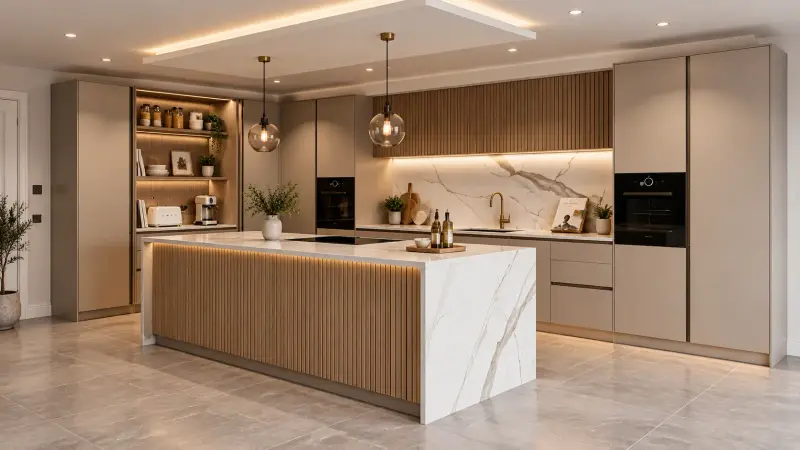
A fluted-wood island with a marble waterfall end, recessed ceiling lighting and a lit pantry alcove.
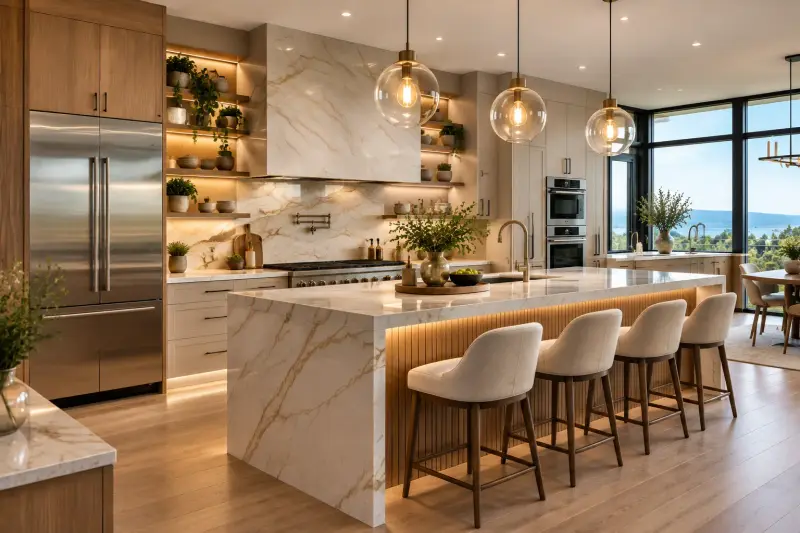
An open plan with a stone waterfall island, fluted wood detailing, glass pendants and large windows.
Photos show design features of the style for reference.
What gives a contemporary kitchen its look
Seven elements do most of the work. Get these right and the rest follows.
Cabinets
Slab or slim-shaker doors in warm taupe or greige, combined with oak or walnut and fluted or ribbed wood fronts on islands and feature walls.
Countertops
Large slabs in marble, quartzite or quartz with soft, warm veining, often continuing down as a waterfall edge.
Backsplash
Matching slab behind the range, sometimes extended into a sculpted hood in the same stone.
Flooring
Light or mid-tone wood planks or large-format tile in warm gray or beige.
Lighting
Layered: recessed ceiling lights, lit open shelving or niches, toe-kick and under-cabinet LEDs, and statement pendants over the island.
Hardware and fixtures
Slim pulls in brass or bronze, a tall faucet and a statement fixture such as a pot filler.
Color palette
Warm neutrals: beige, taupe, cream and oak, with deeper accents of walnut or bronze.
12 contemporary kitchen ideas
Use as many or as few as suit your space. They work best when a few are repeated, not all at once.
A fluted wood island
Vertical fluting on the island gives texture and a handcrafted feel. Add a light strip behind it so the pattern glows at night.
Warm taupe cabinetry
Cabinets in a soft taupe or greige feel more current than white and pair beautifully with oak and cream stone.
A sculpted stone hood
A hood clad in the same stone as the backsplash becomes a quiet focal point and keeps the wall seamless.
Lit open niches and shelves
Backlit shelves or a lit pantry alcove add depth and let you display a few pieces without cluttering counters.
A waterfall stone island
A slab that wraps the sides of the island gives a strong, simple shape. Choose warm veining so it relates to the wood.
Rounded and soft shapes
Curved stool backs, round pendants and softened corners balance hard surfaces and make the kitchen more inviting.
Floor-to-ceiling windows
In an open plan, large windows connect the kitchen to the outdoors. Keep window treatments minimal and let the view become part of the design.
Layered lighting
Combine recessed lights, glowing niches, under-cabinet strips and a few pendants, all on dimmers, to shift the mood throughout the day.
A recessed ceiling detail
A shallow tray or coffer with a concealed light strip adds architectural interest above the island without adding clutter.
Concealed small-appliance pantry
A tall cabinet with pocket doors hides the toaster, coffee station and clutter, so counters stay clear.
Mixed natural textures
Pair stone, oak, plaster, linen and woven rugs. Texture is what makes a neutral kitchen feel rich instead of flat.
An integrated dining table
Extend the island into a table or place a round dining table nearby so cooking and meals share one space.
Layouts that suit a contemporary kitchen
Open plan with a long island
The kitchen opens to living and dining areas, and the island acts as the connector with seating on one side.
L-shape with a feature wall
Cabinets on two walls and a feature wall of wood or stone around the range keep the layout efficient and give it a focal point.
Kitchen with a hidden pantry
A tall pantry wall or back kitchen conceals clutter and supports an uninterrupted main space.
Kitchen to terrace
Large glass doors let the kitchen flow to an outdoor area, so seating and counters extend the cooking space.
Not sure which layout fits your room? Our design and layout planning service compares options before anything is built.
What does a contemporary kitchen cost?
Contemporary kitchens usually fall in the mid-range to major tiers. Large stone slabs, fluted or custom wood details, integrated lighting and floor-to-ceiling windows add cost, while semi-custom cabinets and a single feature element keep it manageable.
As a national baseline, this style typically falls between $26,000 to $125,000 for an average-size kitchen. Local prices differ, so see the cost guide for your state:
How to get the contemporary look for less
You do not have to rebuild to change the feel of a kitchen. These upgrades deliver much of the look at a lower cost.
Repaint the cabinets in a warm neutral
A taupe or greige finish updates solid cabinets in a current way.
Cabinet Painting & RefinishingReface with slab or slim-shaker fronts
New fronts on existing boxes deliver the look without demolition.
Cabinet RefacingLayer the lighting
Add under-cabinet, toe-kick and shelf lighting with dimmers for a high-end effect.
Kitchen Lighting UpgradesAdd one feature element
A fluted island front or a slab backsplash gives the kitchen a focal point for a moderate cost.
Kitchen Island InstallationUpdate the counters
A quartz slab with warm veining refreshes the whole room.
Countertop InstallationOpen the room
Connecting the kitchen to the living area makes it feel current.
Open-Concept Kitchen ConversionCommon contemporary kitchen mistakes
Chasing every trend
Keep big, expensive surfaces timeless and put trends in items that are easy to change, such as stools, pendants and hardware.
Too many textures at once
Fluted wood, ribbed glass, plaster and patterned stone together look busy. Choose two or three.
A cold palette
Warm neutrals are the point. Avoid stark white and gray unless you add wood and brass.
Forgetting task lighting
Ambient and accent lighting alone leave counters in shadow. Add under-cabinet task light.
Ignoring acoustics
Hard surfaces and open plans can be loud. Use rugs, upholstered stools and soft window treatments.
No clear focal point
Open kitchens need one hero, such as the island, the hood or a feature wall.
How contemporary differs from other styles
- Modern: Modern is stricter and more minimal, with flat doors and few materials. Contemporary is warmer, with more texture and softer shapes.
- Transitional: Transitional is calmer and more timeless, with shaker-style doors and neutral tones.
- Classic: Classic uses ornament and symmetry; contemporary relies on texture and simplicity instead.
Services for a contemporary kitchen
These services most often make up a contemporary remodel.
Kitchen Island Installation
Add prep space, storage and seating with a custom or built-in island.
Learn moreKitchen Lighting Upgrades
Layered ambient, task and accent lighting that makes a kitchen work and glow.
Learn moreCountertop Installation
Quartz, granite, marble and more, templated, fabricated and installed precisely.
Learn moreOpen-Concept Kitchen Conversion
Remove or reshape walls to connect the kitchen to living and dining areas.
Learn morePantry & Storage Solutions
Walk-in pantries, pull-outs, corner solutions and custom organization.
Learn moreBacksplash Installation
Tile, stone slab and glass backsplashes that protect walls and finish the design.
Learn moreContemporary kitchens: common questions
What is a contemporary kitchen?
A kitchen that reflects current design: warm neutral colors, natural textures such as oak and stone, clean lines, layered lighting and open planning.
How is contemporary different from modern?
Modern is a defined minimalist style. Contemporary is whatever is current, usually softer, warmer and more textured than strict modern.
Will a contemporary kitchen go out of style?
Specific trends will change. Choosing timeless big surfaces, such as quality stone and simple cabinet fronts, and keeping trend items easy to replace keeps the kitchen current longer.
How much does a contemporary kitchen cost?
Most fall in the mid-range to major tiers depending on stone, wood details, lighting and layout. Your state cost guide and the calculator show local ranges.
What colors are popular in contemporary kitchens?
Warm neutrals such as taupe, beige and cream, paired with oak, walnut and bronze accents, plus the occasional deep green or charcoal for contrast.
More kitchen design ideas
Planning a contemporary kitchen?
Call to talk through your design with a specialist: layout, style, materials and budget.