
Classic Kitchen Design Ideas
Symmetry, millwork and marble. What defines a formal, timeless kitchen, 12 ideas to borrow, the layouts that suit it and what it costs.
Talk to a kitchen specialist about your design: layout, style, materials and budget.
What is a classic kitchen?
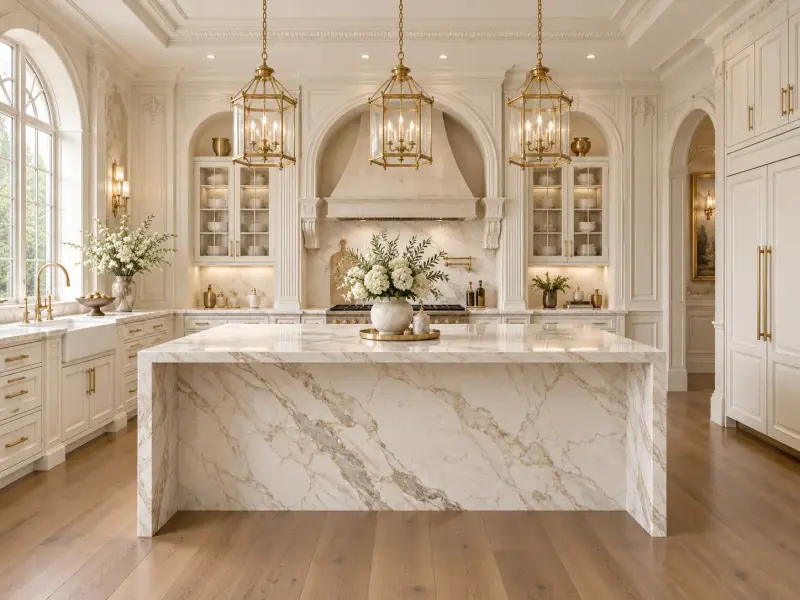
A classic kitchen is the most formal expression of traditional design. Where a traditional kitchen feels relaxed and homey, a classic one is composed: cabinets run to the ceiling, details repeat in pairs, and every surface is finished with care. Think arched hood alcoves, fluted pilasters, marble and brass.
The palette is quiet, usually cream, ivory or warm white with soft gray veining and gold or brass accents. The drama comes from architecture, not color: millwork, arches and symmetry give the room presence even when everything is the same tone.
This guide covers the features that define classic design, twelve ideas, the layouts that make it work, a realistic view of cost and ways to capture the feeling without a full custom build. Photos show design features of the style for reference.
An arched hood alcove, detailed millwork, brass lanterns and a marble island on wide-plank floors.
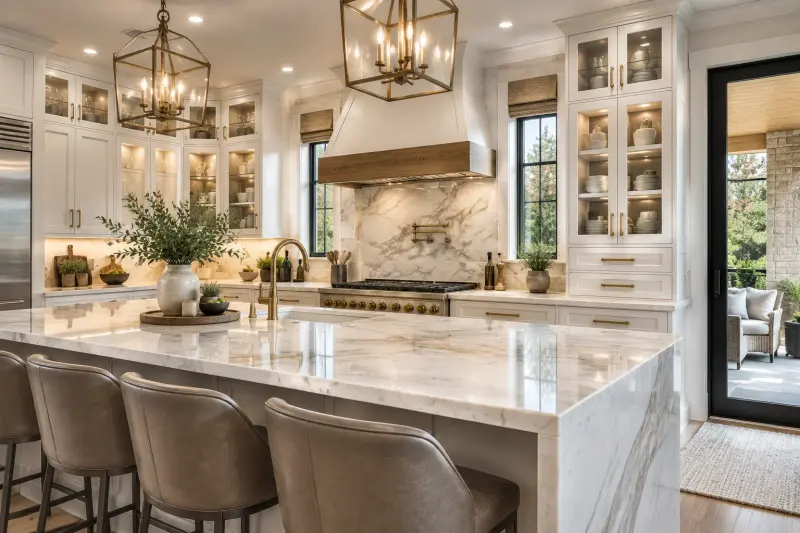
Glass-front cabinetry with interior lighting, a wood-trimmed hood and a polished marble island.
Photos show design features of the style for reference.
What gives a classic kitchen its look
Seven elements do most of the work. Get these right and the rest follows.
Cabinets
Inset or full-overlay paneled doors with detailed millwork: fluted pilasters, corbels, decorative toe kicks and cabinets that run to the ceiling. Finishes are usually cream, ivory or soft white, sometimes glazed.
Countertops
Marble or marble-look stone with soft gold and gray veining, often with mitered or waterfall edges on the island.
Backsplash and hood
A marble slab behind the range, framed by an arched or mantel-style hood alcove, is the signature of the style.
Flooring
Wide-plank hardwood, herringbone wood or patterned stone, laid so the floor adds to the room's symmetry.
Lighting
Lantern or chandelier pendants, usually in a matched set of two or three, plus wall sconces and picture lights.
Hardware and fixtures
Unlacquered brass, polished nickel or aged gold; a bridge faucet and a deep apron sink.
Color palette
Cream, ivory and warm white with brass accents and soft gray veining in the stone. Color usually comes from art, flowers and the view.
12 classic kitchen ideas
Use as many or as few as suit your space. They work best when a few are repeated, not all at once.
An arched hood alcove
Recess the cooktop into an arched niche with a plastered or stone hood. It anchors the room and gives the arch, a defining shape of classic design, a place to repeat in windows and doorways.
Fluted pilasters and corbels
Flank the hood or the sink wall with fluted columns and add corbels beneath shelves or the hood. These details turn plain cabinetry into architecture.
Cabinets that reach the ceiling
Taller uppers with crown molding at the top remove dead space above the cabinets and give the walls a finished, built-in look.
Symmetry around the range
Balance glass-front cabinets, lights and sconces on both sides of the cooking wall. Symmetry is one of the quickest ways to read as classic.
A marble slab backsplash
Carry the same stone from counter to hood with no grout lines. If marble worries you, a quartz slab in a similar pattern gives the effect with less upkeep.
A waterfall marble island
Let the stone run down both sides of the island for a sculptural effect. The veining carries the eye and becomes the centerpiece of the room.
Brass lanterns in a matched set
Two or three identical lanterns over the island add warmth, symmetry and a gentle glow. Choose fixtures sized to the island so they do not look lost.
Unlacquered brass hardware
Unlacquered brass develops a soft patina over time. Pair it with brass lights and a bridge faucet so the metals feel deliberate.
Panel-ready appliances
A refrigerator and dishwasher faced to match the cabinets keep the room looking composed instead of broken up by stainless steel.
A butler's pantry or display wall
A short hallway of cabinets with a counter and glass doors between kitchen and dining room adds storage, prep space and a place for serving pieces.
Wide-plank or herringbone floors
A warm wood floor offsets cool stone and white cabinetry. Herringbone adds pattern without adding color.
Arched windows and transoms
Repeating the arch in a window, doorway or mirror ties the kitchen to the architecture of the house and brings in light.
Layouts that suit a classic kitchen
Symmetrical range wall with a central island
The hood alcove sits at the center of the longest wall, balanced by matching cabinetry, and the island mirrors it across the room.
Large U-shape with a prep island
Generous footprints can wrap three walls and still hold an island, which keeps classic detailing and efficient work zones together.
Kitchen plus butler's pantry
Adding a pantry zone keeps appliances and clutter out of sight and gives the main room a calmer, more formal look.
Open to a formal dining room
Matching millwork, floors and lighting between the kitchen and dining room let the two spaces read as one composed suite.
Not sure which layout fits your room? Our design and layout planning service compares options before anything is built.
What does a classic kitchen cost?
Classic kitchens usually sit in the major tier. Custom or semi-custom millwork, a marble slab, a built-in hood alcove, panel-ready appliances and ceiling-height cabinetry all add cost. You can stay toward the lower part of the range by using painted semi-custom cabinets, marble-look quartz and a standard hood surround.
As a national baseline, this style typically falls between $62,000 to $125,000 for an average-size kitchen. Local prices differ, so see the cost guide for your state:
How to get the classic look for less
You do not have to rebuild to change the feel of a kitchen. These upgrades deliver much of the look at a lower cost.
Add millwork to existing cabinets
Crown molding, pilasters and corbels applied to sound cabinets give a classic look for much less than replacement.
Kitchen Cabinet InstallationPaint in cream or ivory
A refined painted finish is the foundation of the look and costs far less than new doors.
Cabinet Painting & RefinishingReface the fronts
Paneled replacement doors on existing boxes capture the style without demolition.
Cabinet RefacingUse a marble-look quartz
Quartz in a veined pattern gives the effect with easier care.
Countertop InstallationInstall a stone or tile backsplash
Even tile in a marble pattern helps the range wall read as classic.
Backsplash InstallationInvest in the lighting
A matched set of lanterns and sconces changes the room more than many structural changes.
Kitchen Lighting UpgradesCommon classic kitchen mistakes
Ornament without proportion
Heavy details need space and height. In a small or low room, use fewer, smaller details.
Skipping the ceiling
Cabinets that stop short of the ceiling look unfinished in a classic kitchen. Run them up or add crown that closes the gap.
Mixing styles on the hood wall
A modern hood in a classic room breaks the focal point. Let the hood match the millwork.
Too many competing patterns
Veined marble, patterned tile and a patterned floor together compete. Let one surface lead.
Cold lighting
Harsh bright bulbs undo the warmth of cream and brass. Use warm, dimmable light.
Forgetting storage
Beautiful cabinetry still has to hold the kitchen. Plan drawers, pull-outs and a pantry before choosing details.
How classic differs from other styles
- Traditional: Traditional shares the paneled doors and warm finishes but is more relaxed, with less symmetry and less formal millwork.
- Transitional: Transitional borrows classic proportions but simplifies the details, a good option if you like the calm palette without the architecture.
- Contemporary: Contemporary kitchens use current materials and cleaner lines, such as fluted wood and large stone slabs, with far less ornament.
Services for a classic kitchen
These services most often make up a classic remodel.
Kitchen Cabinet Installation
Precise installation of stock, semi-custom and custom cabinetry.
Learn moreCountertop Installation
Quartz, granite, marble and more, templated, fabricated and installed precisely.
Learn moreRange Hood & Ventilation
Range hoods, custom hood surrounds and ductwork that actually vent cooking air.
Learn moreKitchen Lighting Upgrades
Layered ambient, task and accent lighting that makes a kitchen work and glow.
Learn moreBacksplash Installation
Tile, stone slab and glass backsplashes that protect walls and finish the design.
Learn moreKitchen Island Installation
Add prep space, storage and seating with a custom or built-in island.
Learn moreClassic kitchens: common questions
What makes a kitchen classic?
Symmetry, millwork and a refined palette: cream or ivory cabinets to the ceiling, marble surfaces, an arched or mantel hood, brass lighting and wide-plank floors. It reads as formal and timeless.
What is the difference between classic and traditional kitchens?
Both use paneled cabinetry and warm finishes. Traditional is more relaxed and homey, while classic is more formal, with more symmetry, fuller millwork and a stricter palette.
Is marble practical in a classic kitchen?
It is beautiful but can etch and stain, so some owners prefer quartz or quartzite in a similar pattern. Many choose marble for the island and a more durable surface around the sink and range.
How much does a classic kitchen cost?
Classic kitchens usually fall in the major tier because of custom millwork, stone and built-ins. The state cost guides and the calculator show local ranges for your choices.
Can a classic kitchen work in a smaller home?
Yes, with restraint. Use painted cabinets with simple crown molding, a marble-look counter and a matched pair of pendants, and skip heavy columns and corbels.
More kitchen design ideas
Planning a classic kitchen?
Call to talk through your design with a specialist: layout, style, materials and budget.